Every planning application is an argument made of paper. Somewhere in a council office, a case officer who has never seen your home will open a file, and everything they know about your project will be exactly what that file contains. Submit a clear, complete, honest file and you’ve given your project its best possible advocate.
Three Early Decisions
These shape the application route, evidence and professional responsibilities.
Test the water first?
Pre-application advice can be valuable for unusual, sensitive or borderline proposals. A straightforward extension may not need it.
Which application?
A single-house extension usually uses the householder route. New dwellings, change of use and commercial projects normally require a full or specialist application.
Who holds the pen?
You may submit your own application or appoint an experienced agent. The applicant remains responsible for what the file says.
Start with the route and responsibility clear — then commission the documents that route requires.
What’s Inside, and What It’s For
The application form
Facts, not persuasion: what exists, what's proposed, materials, drainage, parking. Consistency matters — a form that says brick while the drawings say render invites questions about everything else.
An ownership certificate — signed correctly
Own all of it yourself? Certificate A. Any part belongs to someone else and you must serve formal notice on them and sign Certificate B instead. Signing A when B was true can invalidate the permission itself.
The site location plan — the red line
An up-to-date map extract, usually at 1:1250, with the site edged in red, any other land you own nearby edged in blue, a north point and a scale bar.
A block plan and the drawings
Existing and proposed floor plans and elevations, to stated scales. These are the heart of the file — the case officer approves drawings, not descriptions.
Supporting reports — only when triggered
A design and access statement for larger or sensitive schemes; heritage statements near listed buildings; tree surveys where protected trees stand; flood risk assessments in the mapped zones.
The fee
Paid on submission. The long-standing “free go” was removed in England from 6 December 2023, so every attempt now costs.
Assembling the file and dreading the bounce?
We build validation-proof application packs — the right form, the right certificate, compliant plans and only the reports your council’s list demands — so the clock starts first time.
Validation
Submitting is not the same as being in. When your file arrives, it faces validation: a completeness check against the national requirements and the council’s own local list. Pass, and your application is registered and the determination clock starts. Fail, and the file sits in limbo while a letter tells you what’s missing.
A trivial fix can still cost days of pure delay, which is why professionals read the validation list first and applicants so often read it second.
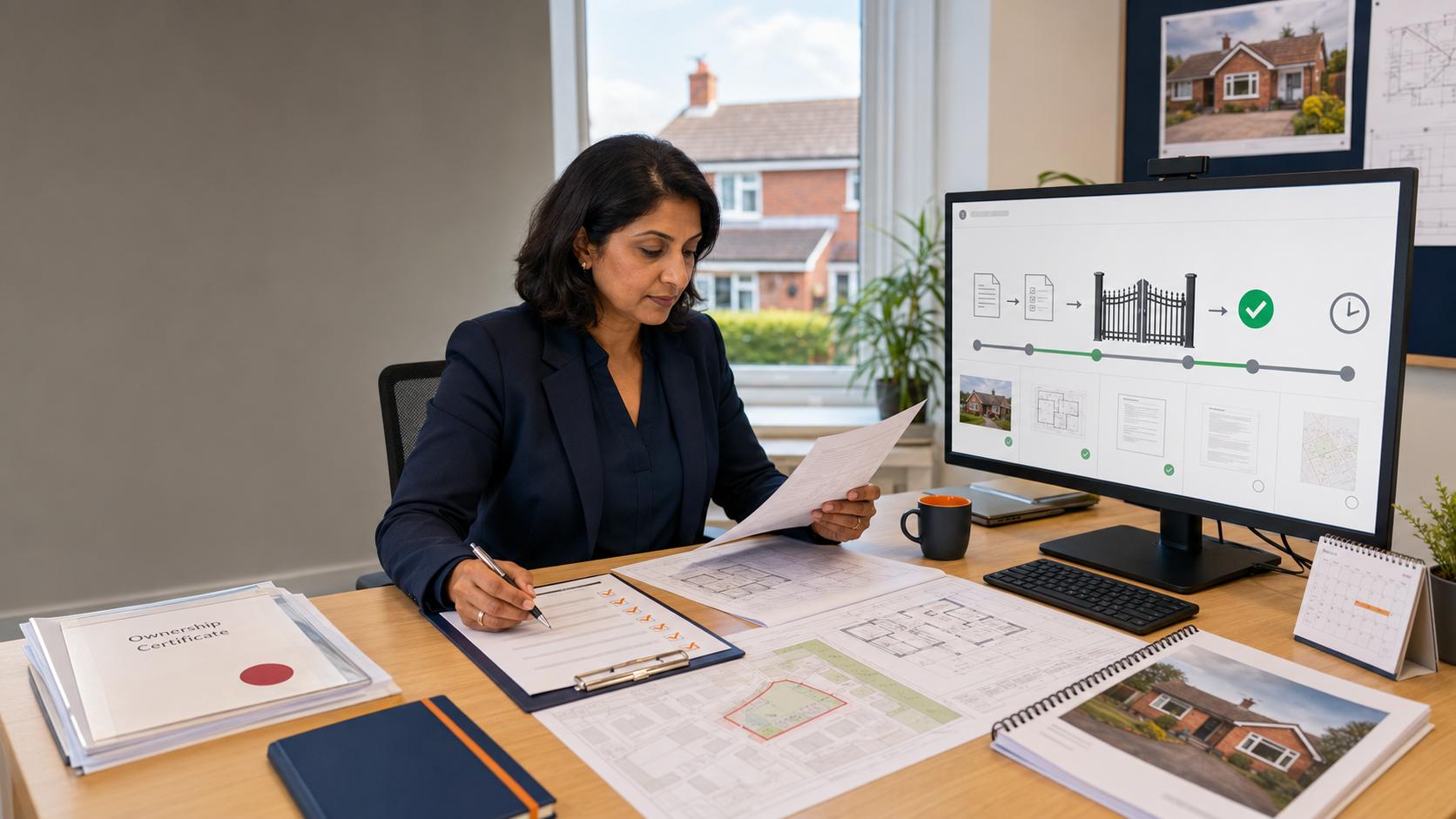
Once Validated, the File Goes Public
Publicity
Neighbours are notified by letter, a site notice may appear on a lamppost, and for some schemes a press notice runs. Interested parties get 21 days to comment.
The case officer
One named planner takes ownership: visits the site, reads the comments, tests the scheme against policy. Answer their emails quickly, take their calls seriously.
The amendment window
Here is the stage that decides marginal applications. An officer minded to refuse will often say so first and invite changes.
The recommendation
The officer writes a report and, for most household schemes, decides under delegated powers — committee stage is the exception, not the rule.
Application in and gone quiet — or an officer asking for changes?
We take over live applications at any stage: chasing progress, negotiating amendments, and steering marginal schemes to the approvable version before a refusal is written.
Decision Day
The decision notice is a legal document, not a letter. Yours will state the approved drawings by number — build from any other version and you’re outside your permission — and it will carry conditions. Pre-commencement conditions must be formally discharged before a spade moves.
And if the answer is no? A refusal notice lists its reasons — read them cold, twice, because they are the map to what happens next.
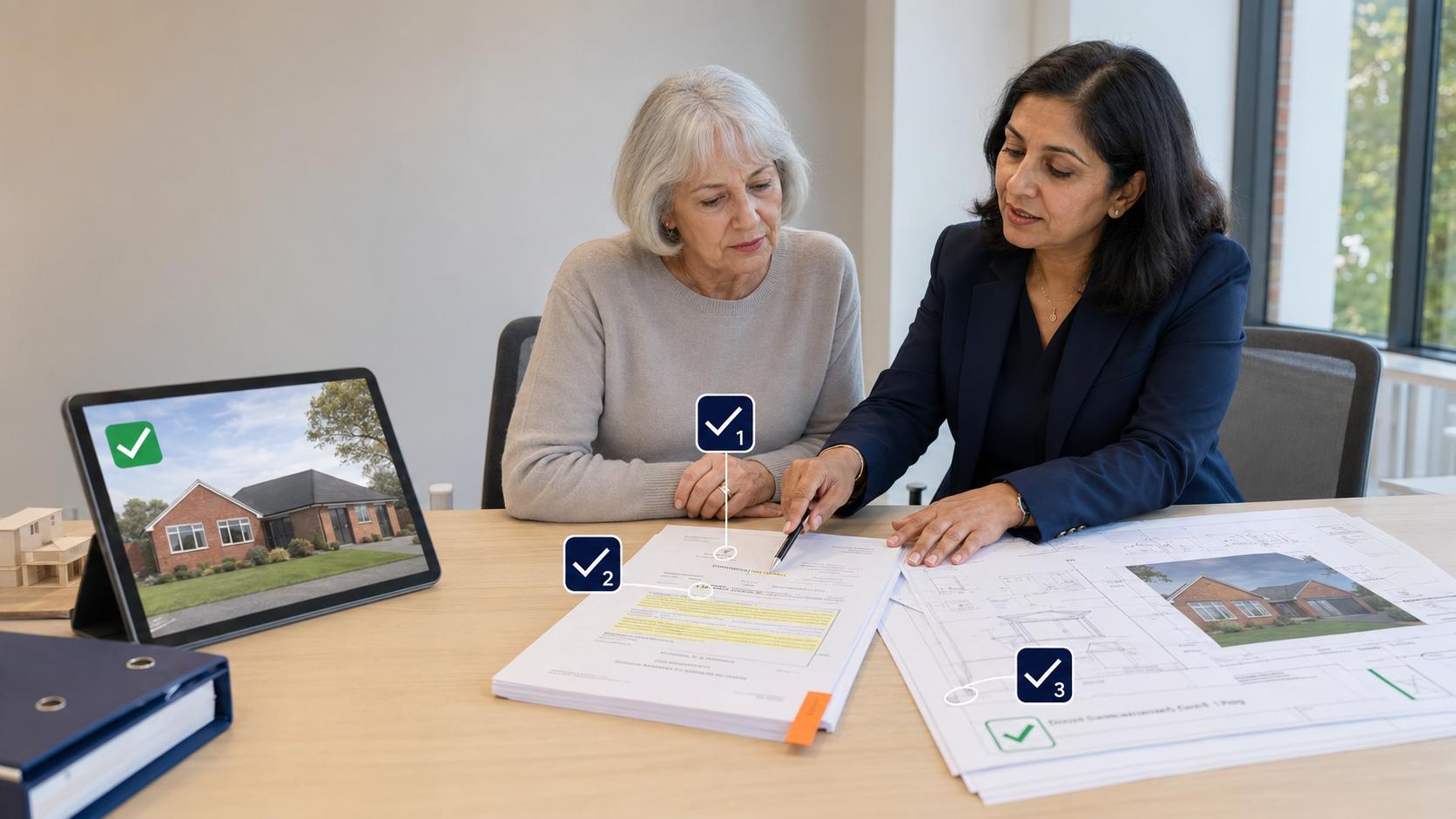
Approved — but conditions standing between you and the first spade?
We prepare and submit the discharge applications, chase the responses, and confirm in writing when your build can lawfully begin.
Six Avoidable Mistakes
- 01 The pack is assembled before checking the council's local validation requirements.
- 02 A boundary sliver or shared access belongs to someone else, but Certificate A is signed.
- 03 Part of the site is missed, the scale bar is absent, or the plan uses an unlicensed map.
- 04 Forms and drawings disagree on materials, dimensions or what is being proposed.
- 05 Slow responses allow the amendment window to close before a concern can be resolved.
- 06 Work starts while pre-commencement conditions remain formally undischarged.
Submission FAQs
Select a question to reveal the answer.
Can I submit a planning application myself, without an agent?
Yes — any applicant can submit directly, usually through the Planning Portal. Validation lists, drawing standards and officer negotiations are where self-submitted applications most often lose weeks.
What is a red line plan?
The site location plan: a licensed, up-to-date map extract — typically at 1:1250 scale — with the whole application site outlined in red, plus any adjoining land you own outlined in blue, a north point and a scale bar.
What is an ownership certificate and which one do I sign?
A formal declaration of who owns the application land. Certificate A applies only if you own every part of the site; if anyone else owns any of it, you must serve notice on them and sign Certificate B.
Do I have to use the Planning Portal?
It's the standard national route and the one most councils prefer, but applications can generally also be made to the council directly.
Will my neighbours see my application?
Yes. Once validated, the application is publicised and the entire file, including drawings and any comments received, is published on the council's online register.
Can I change my application after submitting it?
Usually, yes — minor amendments are routinely accepted during the application, though significant changes may trigger re-consultation or require a fresh application.
What does “validation” actually check?
Completeness, not merit: the right form, the right certificates, compliant plans, the documents demanded by the council's local validation list, and the fee.
What are pre-commencement conditions?
Conditions on an approval that must be formally discharged with the council before any work starts — commonly covering materials samples, construction plans or drainage details.
The council asked to extend the deadline — should I agree?
Usually, yes. An extension of time is generally a sign the officer is working towards an approvable version rather than reaching for a quick refusal to meet the date.
If I'm refused, can I just resubmit for free?
Not any more in England — the fee-free repeat application was removed from 6 December 2023, so a resubmission now carries a fresh fee.
A File That Argues for Itself
A planning application is a file that must argue for itself: the right form and the right certificate, a red line plan that captures the whole site, drawings the officer can approve by number, and only the reports your council’s validation list actually demands.
Validation is the gate — nothing counts until you’re through it. Then the live weeks reward the responsive: a public window, a case officer worth listening to, an amendment call worth taking.