
The honest answer is: it depends — but it depends on things you can actually check. Whether you need to apply is decided by two factors working together: what your property is, and what your project is. Most guides only talk about the second.
Two Routes to a Lawful Yes
As our hub guide What Is Planning Permission? explains, there are two routes: apply to the council, or rely on the national permitted development rules.
Does my project fit within my property’s permitted development rights? If yes, you can build without an application. If no, you need to apply before you start.
Not Your Project
Two identical projects on identical houses in different streets can get different answers. Check the property first.
Flats and maisonettes
Householder permitted development rights apply to houses only. Own a flat and you have essentially none for external work.
Conservation areas & protected landscapes
In a conservation area, National Park, National Landscape, the Broads or a World Heritage Site, permitted development is cut back.
Article 4 directions
Councils can switch off specific permitted development rights across a defined area. You find out from the council, not the street.
Rights removed by condition
Many newer developments were approved with a condition stripping out permitted development rights from day one.
Previous extensions
Allowances are measured against the original house. A previous owner’s extension has already used up part of the allowance.
Don’t know what your property’s planning history says?
We read the register, check for Article 4 directions, removed rights and used-up allowances, and confirm exactly which rules apply to your home.
A Starting Point, Never a Green Light
How common projects usually fall, on a house with its rights intact.
Usually fine without an application
Single-storey rear extensions within limits, loft conversions with rear dormers, integral garage conversions, garden rooms behind the front of the house, porches, internal alterations, solar panels, fences up to 2 metres.
Usually needs an application
Extensions beyond the limits, two-storey side extensions, raising the roof ridge, any external work to a flat, a new dwelling, significant changes of use, self-contained outbuildings, a new access onto a classified road.
The exact size and height limits behind these lists are precise and full of traps. See What Is Permitted Development? and What Is Prior Approval? for the detail. If your design is anywhere near a limit, treat it as needing professional confirmation — nearly compliant is simply non-compliant.
Three Steps, No Guessing
Never rely on what a builder, a neighbour or an article tells you — including this one.
1. Read your property’s planning history on the council’s online register. 2. Test your project against the rules with real dimensions, honestly. 3. Get the answer in writing — a Lawful Development Certificate is the council’s official confirmation.
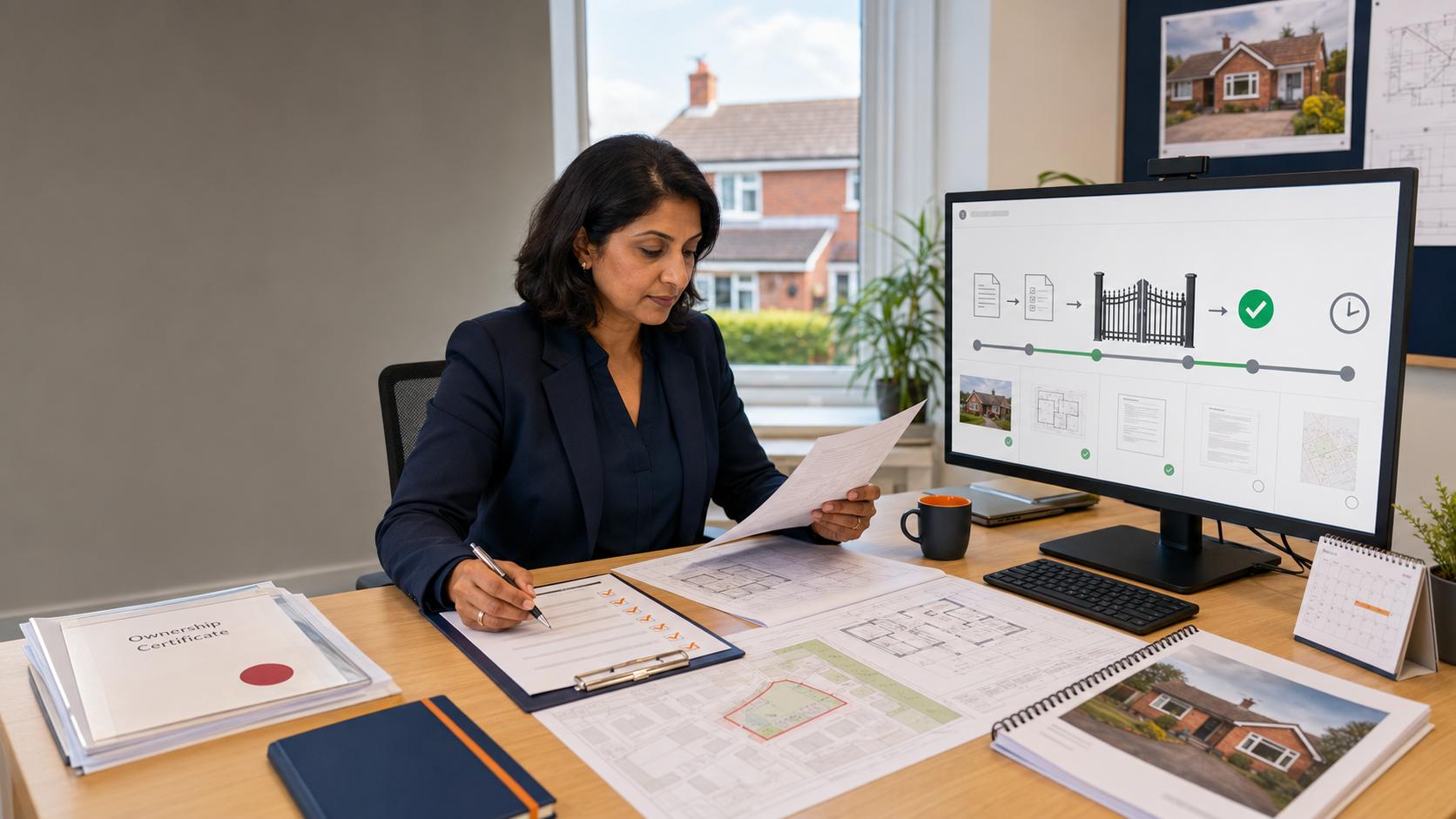
Want the answer in writing before you spend a penny on the build?
We confirm your permitted development position and secure the Lawful Development Certificate that proves it — handling the whole application for you.
What Checking Costs, and How Long It Takes
Briefly — full figures live in Planning Application Costs Explained and How Long Does Planning Permission Take? A Lawful Development Certificate for a proposed project costs half the equivalent application fee, and the council has eight weeks to decide it. If you do need to apply, a householder application in England currently costs £548. Wales sets its own, different fees.
What If You Build Without Permission?
Building without required permission is a breach of planning control. In England, most breaches occurring on or after 25 April 2024 are subject to a ten-year enforcement period. Unauthorised work also reliably surfaces during conveyancing.
A “no application needed” answer from planning is not a free pass either — most structural work needs building regulations approval regardless of the planning position.
Work already done and worried about the paperwork?
We assess what you have, then put it right — retrospective applications, certificates of lawfulness and sale-ready evidence, handled discreetly and quickly.
Your Pre-Project Checklist
- 01 Search the council's planning register for your address and read the history and conditions
- 02 Confirm any designations: conservation area, National Park or National Landscape, listed status
- 03 Ask the council about Article 4 directions
- 04 Identify any previous extensions that have used up allowance
- 05 Sketch the project with real dimensions and test it against the limits
- 06 If it fits: secure a Lawful Development Certificate before building
- 07 If it does not: prepare a householder application with proper drawings
- 08 Check building regulations requirements either way
- 09 Only book builders once your consents are confirmed
Do I Need Planning Permission FAQs
Select a question to reveal the answer.
Do I need planning permission for a single-storey rear extension?
Often not — extensions within the permitted development size and height limits can usually go ahead without an application, and the larger sizes need only prior approval. Flats, designated areas and properties with removed rights are the main exceptions.
Do I need planning permission for a loft conversion?
Many loft conversions with rear dormers fall within permitted development, subject to a volume allowance and design conditions. Front dormers, lofts in conservation areas and conversions in flats usually need an application.
Do I need planning permission for a garden room or office?
Usually not, if it is single storey, within height limits, behind the front of the house and used as part of the main home. Use it as self-contained accommodation and you will need planning permission.
Do I need planning permission for a fence, wall or dropped kerb?
Fences, gates and walls are normally permitted up to 2 metres high, 1 metre next to a highway. A dropped kerb usually needs highways consent, and planning permission too on a classified road.
My neighbour built the same thing without applying — why can’t I?
Because the answer depends on the property as much as the project. Their house may have rights intact where yours are removed, or their work may simply be unauthorised.
How do I find out if my house still has permitted development rights?
Read your property's planning history on the council's online register, checking the conditions on the original permission, and ask about Article 4 directions.
Is a Lawful Development Certificate worth it if it isn’t compulsory?
For anything significant, yes. It converts "we believe it's fine" into official written proof and answers the buyer's solicitor before the question is asked.
Can I apply for planning permission after the work is done?
A retrospective application is possible, but it is judged on normal planning merits with no sympathy for the fact the work exists. Check first, build second.
What is prior approval — is that the same as planning permission?
No. Prior approval is a lighter-touch notification for certain larger permitted development projects, where the council checks only specific issues before work starts.
What should I do if I’m not sure either way?
Stop before spending money on design or builders, and get the position checked professionally — always before a penny goes into the build.
Property First, Project Second
Whether you need planning permission is decided by your property and your project together. Check the property first — flats, designated areas, Article 4 directions, removed rights and past extensions all change the answer — then test the project against the permitted development limits.
If it fits, build with a Lawful Development Certificate as proof; if it doesn’t, apply before you start. The one approach that always fails is guessing.